
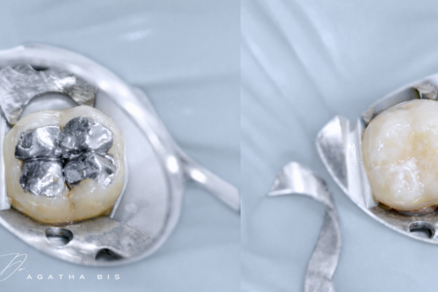
One of the most frequent questions patients ask when they visit my Oakville practice is whether their old silver (amalgam) fillings should be replaced. Because these dark restorations are highly visible, many patients assume that simply having an old silver filling means it is time to drill it out and replace it with a modern, white composite.
However, in advanced restorative dentistry, we do not make treatment decisions based on age or cosmetics alone. The answer to whether an amalgam filling should be replaced depends entirely on a rigorous structural assessment.
The Clinical Assessment: Structure over Age
Silver amalgam has been used in dentistry for over a century, and many of these restorations can last for decades. Consequently, not all silver fillings require immediate removal. Removing a filling that is still structurally sound and perfectly sealed can unnecessarily traumatize the tooth.
Instead of automatically replacing every old filling we see, we evaluate how that specific restoration is interacting with the surrounding natural enamel and your overall bite.
When Is Replacement Medically Recommended?
While we are highly conservative in our approach, silver fillings do have a finite lifespan. Because metal expands and contracts with temperature changes, older amalgam restorations can eventually compromise the integrity of the tooth.
During your comprehensive examination, we look for specific clinical signs of failure. Replacement is strongly recommended when we observe:
- Marginal Breakdown: The seal between the metal and the natural tooth begins to degrade, leaving a microscopic gap.
- Recurrent Decay: Once the margin fails, bacteria can easily seep underneath the old filling and create new, hidden cavities.
- Fracture Lines: The continuous expansion and contraction of the metal can cause hairline cracks in the surrounding natural enamel.
- Tooth Sensitivity: New or worsening sensitivity to hot, cold, or biting pressure often indicates that the filling’s seal is broken or the tooth is fractured.
Significant Wear: When the filling is worn down and no longer properly supports your bite, it must be replaced to prevent occlusal (bite) instability.
The Biomechanical Benefits of Composite Resin
When a silver filling has failed and must be replaced, we transition the tooth to a modern, bio-compatible composite resin. This is not just a cosmetic upgrade; it is a profound structural improvement for the tooth.
The clinical benefits of replacing a failing amalgam with composite include:
- Bonded Reinforcement: Unlike metal fillings, which simply rest inside a hollowed-out space, composite resin chemically bonds directly to the tooth structure, actively holding the tooth together and restoring its internal strength.
- Reduced Structural Stress: Composite materials flex more naturally with your tooth under heavy chewing forces, minimizing the risk of future fractures.
- Conservative Preparation: Because composite is bonded, we do not need to drill away extra healthy tooth structure just to hold the filling in place.
Improved Esthetics: The resin is custom-shaded to match your natural enamel flawlessly, completely eliminating the dark, metallic shadow in your smile.
Precision and Preservation
The most critical factor in replacing an old filling is the skill and philosophy of the practitioner. Replacement must be done incredibly carefully to avoid the unnecessary removal of healthy, natural tooth structure. At the office of Dr. Agatha Bis, we utilize advanced techniques and magnification to ensure that we preserve every possible millimeter of your natural tooth, maintaining its structural threshold and long-term vitality.
– Written by Dr. Agatha Bis
 Book your cosmetic consultation in Oakville
 Visit us at smilesbybis.com
 Call us at (905) 338-6684