
TMJ Treatment in Oakville
TMJ Treatment
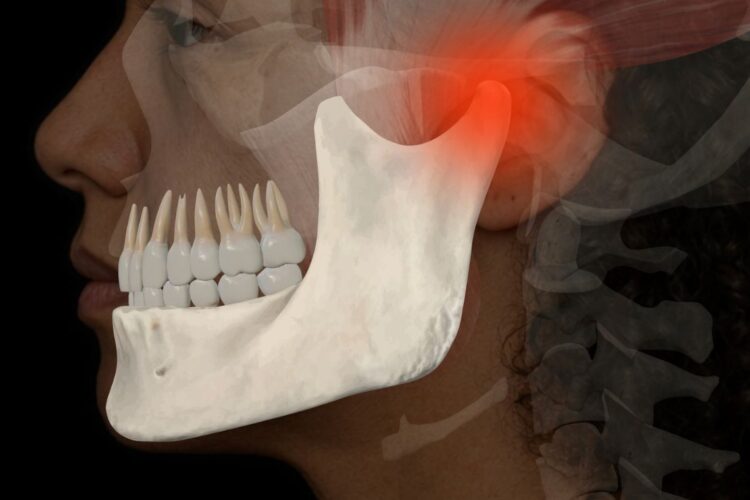
Jaw clicking, locking, pain, limited opening, headaches or ear pain with no ear infection. These can come from the temporomandibular joint (TMJ), the joint in front of each ear where the lower jaw hinges.
Dr. Agatha Bis has treated TMJ problems for 30 years and teaches TMJ diagnosis and treatment to dentists.
Book a TMJ Screen | Refer a Patient (Dentists)
How TMJ care works at our office
TMJ care happens in steps. You decide at each step what to do next.
Step 1: TMJ screen
A short appointment. Dr. Bis asks a few targeted questions and examines the joint: clicking, opening range, jaw path, and the signs visible on the teeth. There is no long questionnaire and no treatment recommendation at this visit.
The screen ends with one of four outcomes:
- No further action needed. You are told why.
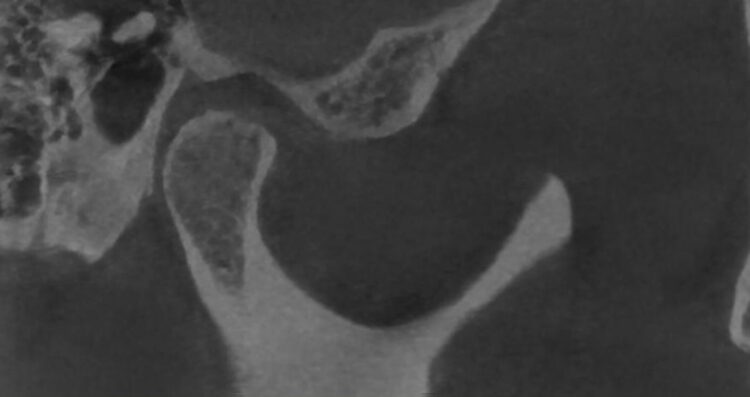
- Imaging. A CBCT scan or MRI to see the joint before any decision.
- Comprehensive TMJ assessment. The findings justify a full workup.
- Referral. The problem is outside what we treat, and you are referred to the appropriate provider.
Step 2: Comprehensive TMJ assessment
A separate, longer appointment with a separate fee. It includes:
- Photographs and a digital scan of the teeth
- Imaging as indicated: lateral or frontal cephalometric x-ray, CBCT
- Muscle assessment as indicated, including TENS
- A detailed discussion of the findings
Treatment options, costs and timelines are presented at this appointment, not before.
Step 3: Treatment
Treatment is planned from the findings of the comprehensive assessment. It depends on the condition of the joint, the muscles and the teeth, and on what you want.
The options, their sequence and the expected timeline are discussed with you before treatment begins.
Why a jaw click matters
A click usually means the disc inside the joint has moved out of position and snaps back when you open. In some patients this stays stable for years. In others, the disc stops returning to position. The jaw then locks, or opening becomes limited.
Once the disc no longer returns, its position is harder to correct. The screen identifies which pattern you have and if imaging is needed.
What causes it
The lower jaw closes where the teeth allow it to close. When the teeth hold the lower jaw too far back, the head of the jaw (the condyle) seats too far back in the joint. This compresses the tissue behind the disc, which contains nerves and blood vessels. Over time the disc is pushed forward off the condyle. This is disc displacement.
This is the mechanism Dr. Bis assesses. It is not the only cause of jaw pain. When the findings point elsewhere, you are told so and referred.
Symptoms
- Jaw pain. In the joint, in front of the ear, or in the chewing muscles of the cheek and temple.
- Clicking or popping. A sound when opening or closing, with or without pain.
- Grating (crepitus). A sandy or grinding sound. This can indicate changes in the joint surfaces.
- Limited opening. Difficulty opening fully, yawning, or taking a large bite.
- Locking. The jaw catches closed or open and needs to be worked free.
- Headaches. Often at the temples, and often worse in the morning.
- Ear pain, fullness or ringing. Can be associated with the joint when an ear cause has been ruled out.
Signs we look for on the teeth
Many TMJ patients have signs in the mouth they have not noticed:
- Worn, flattened or chipped teeth
- Notches in the teeth at the gumline
- Gum recession on specific teeth
- Bony growths inside the jaw (tori)
- A narrow upper or lower arch
- Upper front teeth that tip backward
- Premolars removed for braces
For referring dentists
Dr. Bis accepts referrals for TMJ screening, comprehensive TMJ assessment and TMJ treatment.
Referral findings that indicate a TMJ assessment:
- Joint sounds, deviation or deflection on opening, locking or limited opening
- Wear, abfractions or recession on teeth with lateral interferences
- Fremitus on anterior teeth
- Mobility with a specific bone-loss pattern on radiographs
- Myoclonus on lateral slide
- Tori
- Narrow arches; lingually inclined posterior teeth or maxillary anteriors
- History of premolar extraction for orthodontics
Frequently asked questions
Does a jaw click go away on its own?
Sometimes the click stops because the disc no longer returns to position. That is a progression, not a resolution. A click that stops, followed by limited opening, should be assessed.
Is TMJ treatment covered by insurance?
Coverage varies by plan. We provide the procedure codes so you can check with your insurer before each step.
What does it cost?
The screen, the comprehensive assessment and treatment are billed separately. Fees are provided when you book.
How long does treatment take?
Timelines depend on the joint findings and the option chosen. They are given at the comprehensive assessment.
Should I bring anything?
Any recent x-rays, CBCT or MRI reports, and a list of previous treatment for your jaw.
Dr. Agatha Bis
Dr. Agatha Bis received her Doctor of Dental Surgery degree from the University of Western Ontario in 1996. She has practised for 30 years, with a clinical focus on TMJ, occlusion and restorative dentistry.
She teaches TMJ diagnosis and orthotic treatment to dentists through BIS Institute and lectures internationally on TMJ, occlusion and digital dentistry.

Dr. Agatha Bis
Dr. Agatha Bis received her Doctor of Dental Surgery degree from the University of Western Ontario in 1996. She has practised for 30 years, with a clinical focus on TMJ, occlusion and restorative dentistry.
She teaches TMJ diagnosis and orthotic treatment to dentists through BIS Institute and lectures internationally on TMJ, occlusion and digital dentistry.
Book a TMJ screen with Dr. Agatha Bis
EXCELLENTTrustindex verifies that the original source of the review is Google. After years of suffering from unbearable pain as a result of my TMJ disorder, I was in search of a solution. I came across Dr. Bis online and after reading her other client testimonials, I felt a sense of hope that I hadn’t in quite sometime. After my first visit to the office, I left feeling so confident that Dr.Bis and her team were going to be the solution I was so desperately searching for. Dr. Bis is nothing short of a miracle worker. She is driven, focused, attentive and a master of her craft. Not only is she extremely passionate about her specialty and helping those who are suffering, she is kind, generous and informative. Coming in on her days off when I was in agony to adjust me, always taking time to explain everything to me in a way that I understand. She quite literally gave me my life back. I am now completely pain free and have nice straight wide teeth which was an unexpected bonus. She has constructed a powerhouse team of incredible women who were always so kind, gentle and accommodating. If you are suffering from the dreadful symptoms of TMJ disorder, this is the practice for you. 10/10 could not recommend Dr.Bis and her team more.Posted on GoogleTrustindex verifies that the original source of the review is Google. Nothing to complain about Dr. Agatha's clinic. Everyone is really nice, she is very competent. She knows what she is talking about and explain everything with details..Posted on GoogleTrustindex verifies that the original source of the review is Google. Went here for a TMD/TMJ consultation. This was the most helpful consultation I have had with some hopeful recommendations. I have been to many physio, chiro, dentist, and other doctors. She took it seriously and validated my symptoms as well, including dizziness which my doctor was saying is normal. She explained things well and so did Roanna. 5 stars for Roanna too- friendly, knowledgeable and kind. She was patient with me as well which was wonderful for me as I had limited opening ability. Exceptional customer service. I will note, it is pricey but you have to understand there are factors that need to be considered. Tons of free parking space available so no issue there. I was seen in a timely manner as well. Decided to go with them for a treatment. Will update with results after.Posted on GoogleTrustindex verifies that the original source of the review is Google. I am incredibly grateful for the care I received from Dr. Agatha Bis and her amazing team while dealing with my lock jaw. From the moment I walked in, I was met with kindness and professionalism. Dr. Bis was patient and took the time to explain everything, which made me feel much more at ease. Thanks to their support, I am feeling much better now and plan to check back in a year to ensure everything remains on track. The entire team was friendly and supportive, helping me to overcome this challenging issue. I truly appreciate their dedication and expertise. I highly recommend them to anyone who is looking to take the right step in addressing lock jaw. Thank you for everything!Posted on GoogleTrustindex verifies that the original source of the review is Google. This review is written because Dr. Bus and her team are amazing. I start with the team always courteous and helpful. The professionalism to patients was excellent. I want to say I was a little apprehensive as I had been having TMJ for a year, dentist and specialist before lots of money and no solution. I found Dr. Bis on my own and went in with blind faith. First visit was knowing my issues and lots of pictures of the mouth to see the issue at hand. Second visit a bit more follow up and develop a mouth piece. Third visit the mouth piece. As it was a long history Dr. Bis said it may work as I had it for so long but I needed hope in her expertise. Wow with the first month I noticed some changes. This was an issue I would never want for anyone. Painful on the Jaw but she was amazing. With the follow up I seen more improvement and had better results. The detail in Dr. Bis expertise to understanding each underlying issue and listening to me was key. I never felt that my voice or issues were not heard. I have faith to anyone who goes here. Key so listen and find a solution. This was the best experience I have had and would recommend the team to anyone. Thank youPosted on GoogleTrustindex verifies that the original source of the review is Google. She gave me my life backPosted on GoogleTrustindex verifies that the original source of the review is Google. I can't thank Dr. Bis enough! After waking up with limited mouth opening due to jaw displacement, I tried various facial massages from a chiropractor, which helped alleviate some tension on my face, but unfortunately, the pain would return after a couple of days. Eventually, a maxillofacial surgeon recommended surgery, which I was not prepared to proceed with. Luckily, I found Dr. Bis online and decided to schedule an appointment. She suggested an appliance, and my headache and earache disappeared almost instantly! Dr. Bis has been fantastic throughout, and her entire team is warm and friendly, creating such a welcoming environment. Highly recommend her to anyone needing TMJ treatment!Posted on GoogleTrustindex verifies that the original source of the review is Google. I’ve been seeing Dr. Bis since January for a challenging TMJ case complicated by other co-morbidities. After having previously seen another jaw specialist there was a notable difference in both the level of care and diagnostic approach she provided. Dr. Bis brings an incredible depth of knowledge, kindness, and genuine commitment to her patients’ well being, qualities that are rare to find. She has invested significant time and effort into understanding my specific needs, considering both my TMJ and other co-morbidities. I appreciate her candor about which treatments she believes will help and which won’t, ensuring no one’s time or money is wasted. Dr. Bis has also been proactive in suggesting other avenues to explore, expanding my treatment options and resources. I’m still in the midst of receiving treatment from her and I feel hopeful about the progress we’re making, I would highly recommend her to anyone dealing with TMJ issues. I also want to recognize Dr.Bis' wonderful team. Laura is always cheerful and kind, whether on the phone or in person. Kera, Roanna and Kelly are all so friendly and skilled at their jobs, creating a welcoming and supportive environment. Their genuine compassion and dedication to patient care are commendable.Posted on GoogleTrustindex verifies that the original source of the review is Google. I can’t say enough about the level of care Dr Bis has provided. She took the time to detail what was wrong, how to fix the issue, the cost and time involved. I have been under her care for over 2 years and my “ear infections” that were determined to be TMD have now been fixed with “trays”. I have been 2 years without ear pain and would highly recommend Dr. Bis.Posted on GoogleTrustindex verifies that the original source of the review is Google. When the symptoms first started to appear, a bite and jaw disorder was the furthest thing from my mind. I was experiencing pain and numbness in my left hand, which eventually radiated up to my arm, to my chest and back… At first, my doctor blew it off as workout related … But when the pain increased & persisted, I was prescribed a cocktail of drugs from gabapentin to Lyrica, a handful of painkillers and sleeping pill, just to cope. Nothing would touch the pain, which, within weeks became debilitating… Thats the best way to describe it, I felt like a wet bag of cement on top of the excruciating discomfort radiating throughout my chest, back and arm The doctor finally sent me to a specialist who wanted to do a surgery to open up the spinal column, to give the nerves room, to alleviate the compression. This seemed extreme, so I sought out the care of a chiropractor, which yielded no measurable results. My search for answers finally led me to Dr Bis who I have known for years. She has had amazing success with jaw pain and TMJ patients So while I was waiting for my neck surgery, she suggested “let’s try this”. No guarantees. She always says that, by the way. With nothing to lose and everything to gain, I went through her protocol. And that was a Game Changer: I was noticeably better the first evening, the first evening in months I was able to sleep, without medication, I might add. It’s been almost a year now. I am 98% back to normal life, with no meds and more importantly, no surgery!!!! There are a few steps left in the process, but I’m eternally grateful for how far we’ve come. The whole journey has been life-changing. Dr Bis is truly one of a kind. It’s impossible to imagine what life would be like, having not gone through this treatment.Verified by TrustindexTrustindex verified badge is the Universal Symbol of Trust. Only the greatest companies can get the verified badge who has a review score above 4.5, based on customer reviews over the past 12 months. Read more