Not every dental emergency can be prevented.
Accidents happen.
But some of the broken teeth and dental injuries we see begin with surprisingly ordinary habits: chewing ice, opening packaging with your teeth or playing sports without a mouthguard.
A few simple changes can help protect your teeth and reduce your chances of needing an emergency dentist in Oakville.
Wear a Mouthguard During Sports
One of the most important ways to protect your teeth during sports is to wear a properly fitting mouthguard.
A mouthguard can help absorb impact and reduce injury to the teeth, lips, cheeks and tongue.
They are particularly important for contact and collision sports, but dental injuries can happen during many recreational activities.
Different mouthguard options are available, including:
- Stock mouthguards
- Boil-and-bite mouthguards
- Custom-fitted dental mouthguards
A dentist can help you determine which type provides an appropriate fit and level of protection for your activity.
Do Not Use Your Teeth as Tools
Your teeth are designed for chewing food, not opening packages. Using your teeth to:
- Open plastic packaging
- Cut tape or thread
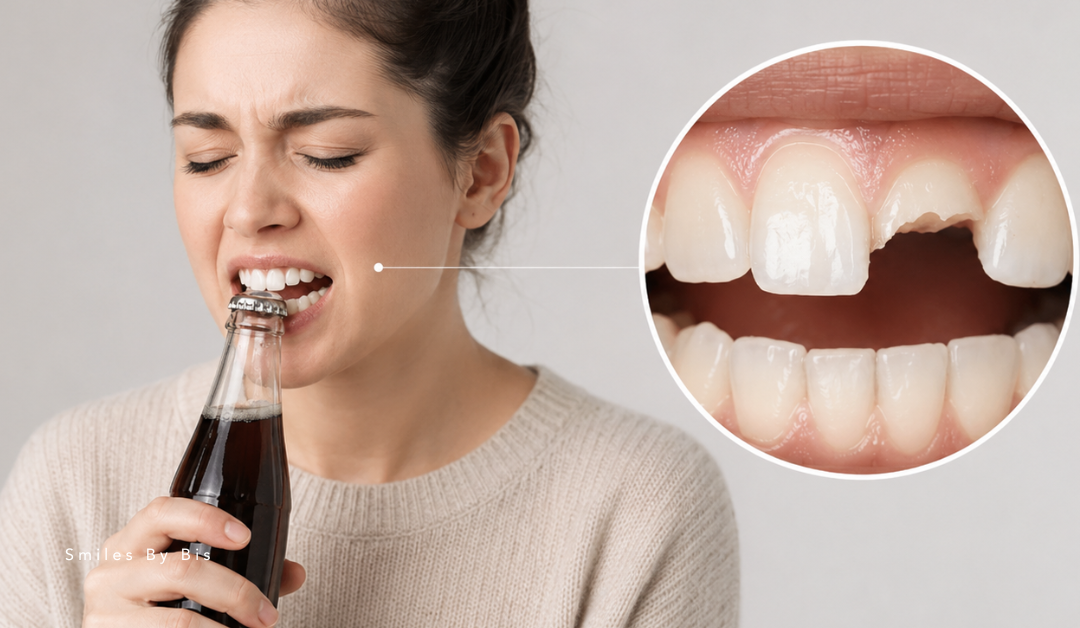
- Open bottle caps
- Hold hard objects
- Crack shells
can place forces on the teeth that they were not meant to handle. One small shortcut can result in a chipped or fractured tooth.
Use scissors or the appropriate tool instead.
Be Careful With Very Hard Foods
Teeth can also break while eating. Ice, popcorn kernels, very hard candies and similar foods can place concentrated pressure on a tooth.
This may be particularly risky if a tooth already has a large filling, crack or other weakness that you do not know about.
Pay attention when chewing hard foods and avoid intentionally crunching ice. Do Not Ignore a Small Chip or Crack
A tooth does not always go from perfectly healthy to severely broken in a single moment.
Sometimes there are warning signs first.
You may notice:
- Sensitivity when biting
- Pain when chewing
- A rough or chipped edge
- Sensitivity to temperature
- A filling or crown that feels different
- A tooth that feels weaker than usual
Having these changes evaluated earlier may allow your dentist to identify a problem before more of the tooth breaks.
Keep Up With Regular Dental Examinations
Preventive dental care is not only about cleaning your teeth.
Routine examinations allow your dentist to look for problems that could potentially contribute to a future dental emergency, including:
- Tooth decay
- Cracked or weakened teeth
- Worn restorations
- Loose crowns or fillings
- Gum problems
- Signs of excessive wear
Finding a problem before it becomes painful can sometimes mean simpler treatment and fewer surprises.
Protect Your Teeth If You Grind or Clench
Repeated heavy forces from grinding or clenching can contribute to tooth wear, fractures and damage to dental restorations.
However, not every patient needs the same appliance or treatment.
If you notice excessive wear, chipped teeth or frequently damaged restorations, talk to your dentist about what may be causing it.
The goal should be to understand the forces affecting your teeth before deciding on treatment.
Make a Dental Emergency Plan
Even with good prevention, accidents can still happen.
Know who you would call if:
- A tooth is knocked out
- A tooth suddenly breaks
- Severe tooth pain develops
- Your child experiences a dental injury
- A crown or filling comes out
Save your dental office’s phone number in your phone rather than waiting until an emergency happens to search for help.
For immediate steps, read our guide: What to Do in a Dental Emergency: Same-Day Care Guide.
What If a Tooth Is Knocked Out During Sports?
If a permanent adult tooth is knocked out, act quickly.
Hold the tooth by the crown rather than the root. If necessary, gently rinse it without scrubbing.
Place it in cold milk (if available) and contact a dentist immediately. Do not attempt to reinsert a knocked-out baby tooth.
Protecting Your Teeth in Oakville
Preventing a dental emergency often comes down to protecting your teeth from unnecessary forces and identifying problems before they become larger.
At the office of Dr. Agatha Bis in Oakville, preventive dental care is about more than responding when something hurts. It is about understanding your oral health and reducing avoidable problems when possible.
If you participate in sports, have concerns about a damaged tooth or want to discuss ways to protect your teeth, our dental team can help.
Call our office at 905-338-6684 to book an appointment.