
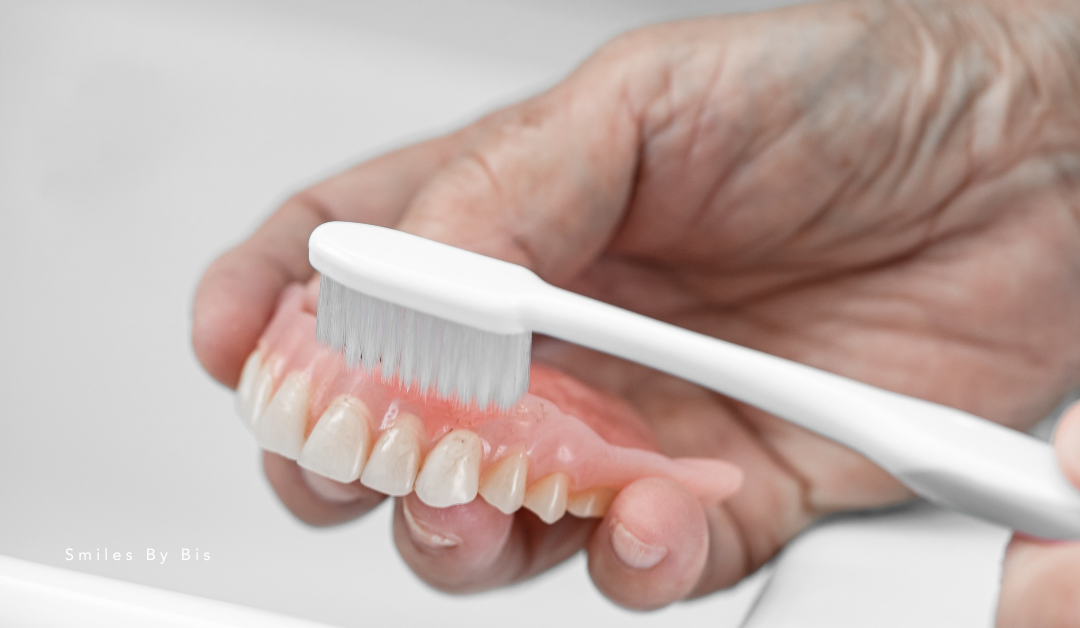
Dentures need daily care just like natural teeth.
Proper cleaning can help remove food and plaque, maintain the appearance of your dentures and protect the tissues and any remaining natural teeth in your mouth.
Here are some simple habits that can help you care for your dentures properly.
Clean Your Dentures Every Day
Remove your dentures and rinse away loose food particles before brushing. Use a soft-bristled toothbrush or denture brush with a denture cleaner or mild soap.
Clean all surfaces gently, paying particular attention to areas where food and plaque may collect.
Regular toothpaste is generally not recommended for cleaning dentures because it can be too abrasive for denture materials.
Clean Your Mouth Too
Taking care of dentures does not replace taking care of your mouth. When your dentures are removed, gently clean your:
- Gums
- Tongue
- Roof of the mouth
- Remaining natural teeth, if you have them
If you wear a partial denture, brushing and flossing your natural teeth remains especially important.
Remove Your Dentures at Night
In general, dentures should be removed overnight to give the tissues in your mouth time to rest.
When they are not being worn, dentures should usually be kept moist so they do not dry out or change shape.
Follow your dentist’s instructions about the appropriate soaking solution for your specific denture.
If your denture contains metal components, ask before using a denture-cleaning solution because some products may not be appropriate.
Avoid Very Hot Water
Do not soak your dentures in hot water.
Excessive heat can affect the denture material and potentially change its shape. Use the temperature and cleaning method recommended for your appliance.
Handle Dentures Carefully
Dentures can break if they are dropped.
When removing or cleaning them, consider standing over a folded towel or a sink partially filled with water.
A simple precaution can help protect your denture from an accidental fall onto a hard surface.
Don’t Try to Fix a Broken Denture Yourself
If you notice a crack, broken tooth, bent component or other damage, contact your dentist.
Household glues and do-it-yourself repairs can damage the denture or change how it fits.
A professional assessment can determine whether the denture can be repaired, adjusted or needs to be replaced.
Pay Attention to Changes in Fit
Your mouth changes over time.
Even if the denture itself has not broken, changes in your gums and supporting tissues can affect its fit.
Contact your dentist if your denture begins to:
- Move more than usual
- Cause repeated soreness
- Feel uncomfortable
- Affect your chewing
- Feel different when you speak
An adjustment or reline may sometimes improve the fit. In other situations, replacing the denture may be more appropriate.
Keep Your Dental Checkups
Wearing complete dentures does not mean dental visits are no longer necessary. Your dentist can check:
- How your dentures fit
- The condition of the denture
- Your gums and oral tissues
- Remaining natural teeth
- Areas of irritation or soreness
Regular examinations also help identify changes you may not notice yourself.
Good denture care is a combination of daily cleaning, careful handling and regular professional assessment.
If your dentures are uncomfortable, damaged or no longer fitting the way they used to, do not assume you simply have to adapt to them.
At Smiles by Bis in Oakville, our dental team can assess your dentures and your mouth to determine whether an adjustment, repair or replacement should be considered.
Call 905-338-6684 to book an appointment.