
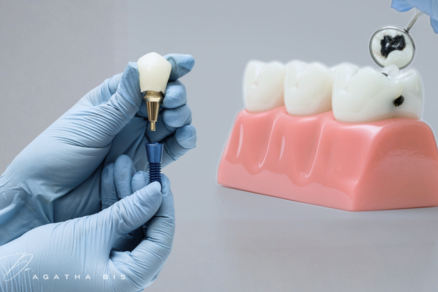
Patients often ask why a seemingly simple cavity or a broken tooth cannot just be patched up with a standard composite filling. It is a valid question, as conservative dentistry – preserving as much natural tooth structure as possible – is always our primary ideal. However, in advanced restorative dentistry, we must respect the laws of biomechanics.
At Smiles by Bis in Oakville, my approach to restoring a damaged tooth is rooted in structural engineering and occlusal (bite) stability. There is a critical tipping point where a tooth is so structurally compromised that a composite filling can no longer provide the necessary reinforcement. Understanding this structural threshold is the key to preventing catastrophic tooth failure and preserving your smile for the long term.
The Structural Threshold: When a Filling is No Longer Enough
Teeth are designed to withstand incredible amounts of force, but that strength relies on a healthy, intact anatomical structure. When a tooth is compromised, we must evaluate whether the remaining natural architecture can still support itself under the heavy, repetitive demands of chewing.
A filling may no longer be a viable, structurally sound option when the decay or fracture involves:
- Multiple Cusps: The raised points on the chewing surfaces of your back teeth bear the brunt of your bite force.
- Thin Remaining Walls: If the decay leaves the outer walls of the tooth too thin, they become highly susceptible to snapping off.
- Deep Crack Lines: Fractures that extend deep into the tooth or sub-gingivally (below the gumline) require full coverage to prevent the tooth from splitting apart.
- Large Previous Restorations: Replacing an already massive, failing filling with another massive filling simply weakens the tooth further.
The Hidden Risks of Overbuilding Large Fillings
It can be tempting to request a large composite filling instead of a crown, but “overbuilding” a filling carries severe long-term risks. Composite resin is an excellent, durable material for small to moderate repairs, but it does not possess the structural rigidity required to hold a severely broken tooth together.
When a massive composite restoration is placed under a heavy functional load, it may flex. This microscopic flexing is highly destructive. Over time, it can:
- Crack the adjacent, natural enamel.
- Cause the protective seal (margins) around the filling to fail, allowing new decay to seep underneath.
- Lead to a catastrophic fracture that progresses deep into the nerve chamber, necessitating root canal therapy or even complete tooth extraction.
Proper case selection is what truly protects the tooth. A porcelain crown, which acts like a protective helmet, surrounds and binds the remaining tooth structure together, absorbing and evenly distributing bite force.
Our Precision Decision Framework
In our Oakville clinic, we never guess when it comes to your restorative care. To determine the exact right treatment for your tooth, we utilize a comprehensive decision framework. Before recommending a crown over a filling, we meticulously evaluate:
- Remaining Wall Thickness: Calculating exactly how much healthy enamel is left to support a restoration.
- Functional Load: Understanding the specific chewing forces that the individual tooth must endure.
- Parafunction (Bruxism): Identifying destructive habits like chronic teeth grinding or clenching that will easily destroy a weak filling.
- Occlusal Stress Patterns: Mapping how your upper and lower teeth meet to ensure your bite is perfectly balanced and will not trigger TMJ discomfort.
Strength and Longevity Above All
Preserving your natural tooth structure is always our ideal starting point, but we will never do so at the expense of your tooth’s long-term strength and survival. By respecting the structural threshold, we provide restorations that are engineered to last, protecting both your oral health and your financial investment.
– Written by Dr. Agatha Bis
 Book your cosmetic consultation in Oakville
 Visit us at smilesbybis.com
 Call us at (905) 338-6684