
If you are considering a dental implant, longevity is probably one of your biggest questions.
Dental implants are designed as a long-term tooth replacement, and with good oral health and proper maintenance, an implant can function for many years.
But there is an important distinction patients often do not realize:
The dental implant and the visible replacement tooth are not the same thing. Understanding that difference makes implant longevity much easier to explain.
The Implant vs. the Crown
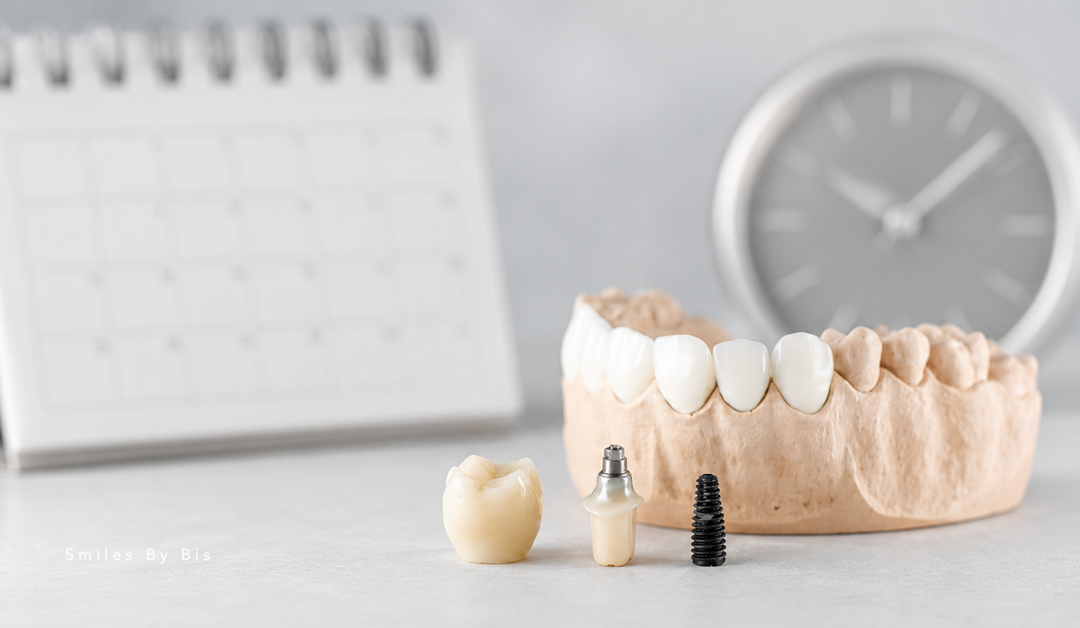
A single dental implant restoration usually has three components: The implant: The portion placed in the jawbone that replaces the missing tooth root.
The abutment: The connection between the implant and the crown. The crown: The visible artificial tooth that you use when smiling and chewing. These components do not necessarily age at the same rate.
The implant itself may remain integrated and functional for a very long time, while the crown above it may eventually wear, chip or need replacement.
Replacing a crown does not necessarily mean replacing the implant.
Can a Dental Implant Last a Lifetime?
Some dental implants can remain functional for decades and potentially for a patient’s lifetime.
However, no dentist can responsibly promise that every implant will last forever. Long-term success depends on several factors, including:
- Gum and bone health
- Oral hygiene
- Smoking
- General health
- Implant position
- The forces placed on the implant
- Regular professional care
- The condition of the restoration
The better question may be:
What can we do to give this implant the best chance of functioning well long term?
What Can Affect the Life of a Dental Implant?
Oral Hygiene
Implants cannot develop cavities the way natural teeth can.
But that does not mean they cannot develop problems.
Plaque can accumulate around an implant and contribute to inflammation of the surrounding tissues.
Keeping the implant and surrounding gum tissues clean is essential.
Gum and Bone Health
The implant depends on healthy supporting tissues.
Changes in the gums and bone around the implant can affect its long-term stability.
This is one reason regular dental examinations remain important after treatment is complete.
Smoking
Smoking can interfere with healing and is associated with increased risk of implant complications.
If you smoke and are considering implant treatment, discuss this openly with your dentist.
Your Bite and Dental Forces
Implants have to function within the rest of your bite.
Excessive forces, grinding or clenching can place stress on the restoration and other components.
Your dentist should evaluate how the implant interacts with the surrounding teeth.
Maintenance
Dental implants should not be treated as “install it and forget it” dentistry. Regular professional care allows your dental team to monitor:
- The gums
- Supporting bone
- Implant stability
- The crown
- Your bite
- Your home-care routine
Can the Crown on an Implant Wear Out?
Yes.
The crown is exposed to daily chewing forces just like your natural teeth and other dental restorations.
Over time, it may:
- Wear
- Chip
- Fracture
- Become loose
- Need replacement for another clinical reason
This does not automatically mean that anything is wrong with the implant itself. Your dentist needs to determine which component is affected.
What Are Signs an Implant Should Be Checked?
Contact your dentist if you notice:
- Movement or looseness
- Bleeding or swelling around the implant
- Persistent discomfort
- Changes in your bite
- A chipped or damaged crown
- Difficulty cleaning around the implant
- A change in the gum tissue around it
An implant should not normally feel loose.
Do not wait for a routine cleaning if something feels significantly different. How Can You Help Your Dental Implant Last?
The basics matter.
- Brush consistently
- Clean between your teeth and around the implant
- Follow the cleaning technique recommended by your dental team
- Attend regular dental examinations and professional cleanings
- Avoid chewing ice and other extremely hard objects
- Have grinding or clenching evaluated when appropriate
- Do not ignore bleeding, swelling or looseness
Implant maintenance is a partnership between the patient and dental team. Long-Term Dental Implant Care in Oakville
Dental implants can be an excellent long-term treatment for appropriately selected patients, but longevity starts with proper planning and continues with good maintenance.
At Smiles by Bis in Oakville, we assess not only whether an implant can be placed, but how the restoration will function within the rest of your mouth.
If you are considering a dental implant or already have an implant that you would like evaluated, our dental team can help.
Call 905-338-6684 to book an appointment in Oakville.